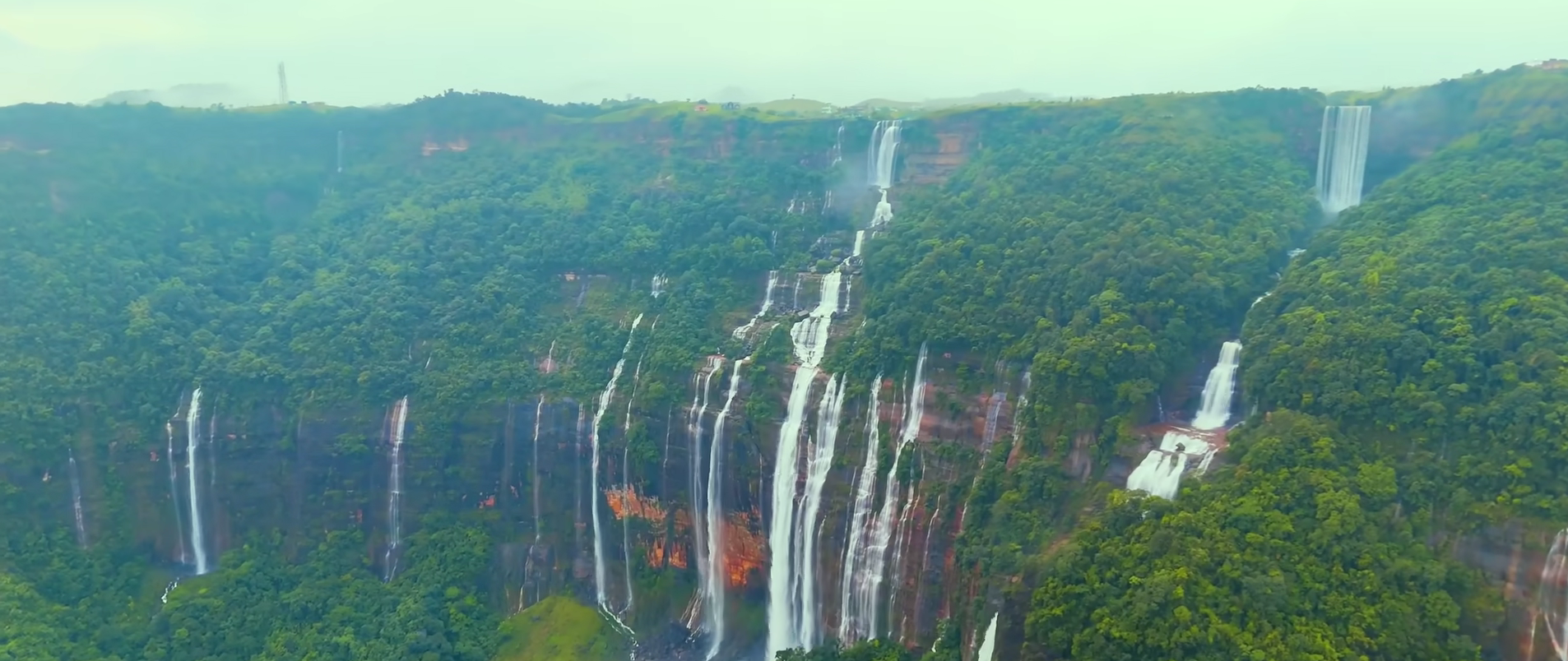
In the heart of Meghalaya's rain-drenched landscape, Nohsngithiang Falls cascades in seven magnificent segments down limestone cliffs. Known as the Seven Sisters Falls, this natural wonder plunges 315 meters into the valleys below, creating one of India's most spectacular waterfall displays. The falls symbolise the unity of Northeast India's seven sister states, making them a destination where nature and culture beautifully intertwine.
About Nohsngithiang Falls
Location and Geography
Nohsngithiang Falls is located in the East Khasi Hills district of Meghalaya, just 1 km south of Mawsmai village and approximately 4 km from Sohra, also known as Cherrapunji. The falls sit about 60.7 km from Shillong and roughly 155 km from Guwahati Airport.
The waterfall's position on the Khasi Hills plateau edge creates perfect conditions for its dramatic drop. The limestone cliffs have been carved over millennia, creating distinctive formations giving the falls their segmented appearance. From viewpoints, visitors can see beyond the falls to the Bangladesh plains, adding visual drama to an already stunning scene.
Height and Characteristics
With a drop of 315 meters (1,033 feet) and an average width of 70 meters (230 feet), Nohsngithiang Falls ranks among India's tallest waterfalls. What makes it unique is its seven-segmented structure. During monsoon season, seven distinct streams cascade parallel down the cliff face, creating the appearance of seven sisters standing side by side.
The waterfalls are entirely rain-fed, meaning their appearance varies dramatically with the seasons. During monsoon months from June to September, the falls thunder with tremendous force, each segment flowing powerfully. In the dry season, water flow reduces significantly, sometimes with only a few segments active. This seasonal variation makes timing crucial for experiencing the falls at their most impressive.
The Symbolic Significance
Representing the Seven Sister States
The seven segments symbolically represent Northeast India's seven sister states—Arunachal Pradesh, Assam, Manipur, Meghalaya, Mizoram, Nagaland, and Tripura. This transforms the waterfall from a natural feature into a cultural emblem representing regional unity and diversity.
Each segment flows independently, yet together creates a powerful metaphor for how these states, while distinct in cultures and traditions, form part of a greater whole. This symbolism resonates strongly with Northeast visitors, who see in the falls a reflection of their shared identity.
Cultural Identity
For the Khasi people and broader Meghalayan community, Nohsngithiang Falls represents pride in their natural heritage. The falls have become an iconic image of Meghalaya, serving as a reminder of the state's extraordinary natural beauty and adding depth to the visitor experience.
Visiting Nohsngithiang Falls
How to Reach the Falls
Reaching Nohsngithiang Falls typically begins with travel to Shillong or Sohra. From Guwahati, visitors hire cabs or use local transport to reach Sohra, approximately four to five hours away. From Shillong, the journey takes about two hours.
Once in Sohra, the falls are just 4 km away via a well-maintained road. The journey offers scenic Khasi Hills landscapes with rolling hills, deep valleys, and lush vegetation. Many visitors hire local guides who provide context and ensure they don't miss the best viewpoints.
- Nearest Village: Mawsmai (1 km)
- From Sohra/Cherrapunji: 4 km
- From Shillong: 60.7 km, 2 hours by road
- From Guwahati: 155 km, 4-5 hours by road
- Nearest Airport: Guwahati Airport
Best Time to Visit
The monsoon season from June to September is when Nohsngithiang Falls earns its reputation as one of India's most spectacular waterfalls. During these months, all seven segments flow with full force, creating a continuous curtain of water. The roar, rising mist, and lush greenery create an overwhelming sensory experience.
The post-monsoon period of October and November provides an excellent balance, with substantial water flow from recent rains but clearer weather allowing better visibility and photography. The dry season from December to February sees reduced flow but offers pleasant weather and the opportunity to see geological formations more clearly.
- Monsoon (June-September): All seven segments at full force, most spectacular
- Post-Monsoon (October-November): Substantial flow with clearer weather, ideal for photography
- Winter (December-February): Reduced flow but pleasant weather, geological formations visible
The Viewing Experience
The primary viewing point is accessed through Sohra Eco Park, which provides excellent vantage points overlooking the falls and surrounding canyons. The eco park features well-maintained pathways, viewing platforms with safety railings, and visitor facilities.
One celebrated aspect is the sunset experience. As the sun descends, it illuminates the cascading water in brilliant hues of orange, gold, and pink. The play of light creates an ever-changing display that photographers and nature lovers find irresistible. Many visitors arrive in the afternoon and stay through sunset to capture this magical transformation.
Natural Beauty and Geological Features
The Limestone Cliffs and Ecosystem
The limestone cliffs are geological wonders shaped by millions of years of water erosion. The limestone's composition gives the cliffs their distinctive light colour, contrasting beautifully with dark green vegetation and white water. The area features numerous caves, including the famous Mawsmai Cave nearby.
The constant moisture supports a lush ecosystem adapted to high humidity and regular rainfall. The surrounding forests feature subtropical species, including ferns, mosses, and orchids. During monsoon season, the entire landscape transforms into a vibrant green wonderland.
Practical Information for Visitors
What to Bring and Safety
Visitors should prepare for wet conditions. Waterproof bags for electronics are essential, as mist can extend far during heavy flow. Non-slip footwear is crucial. During the monsoon season, waterproof jackets and umbrellas are necessary.
Photographers should bring telephoto lenses for details and wide-angle lenses for capturing the full breadth. The changing light conditions, especially around sunset, offer endless creative possibilities.
While viewing areas are designed with safety in mind, visitors should remain within designated zones and respect all safety barriers. During the monsoon season, wet surfaces and strong winds require extra caution.
- Waterproof bags for electronics (mist can extend far)
- Non-slip footwear (essential for safety)
- Waterproof jackets and umbrellas (especially during monsoon)
- Telephoto and wide-angle lenses for photography
- Light snacks and water
Nearby Attractions
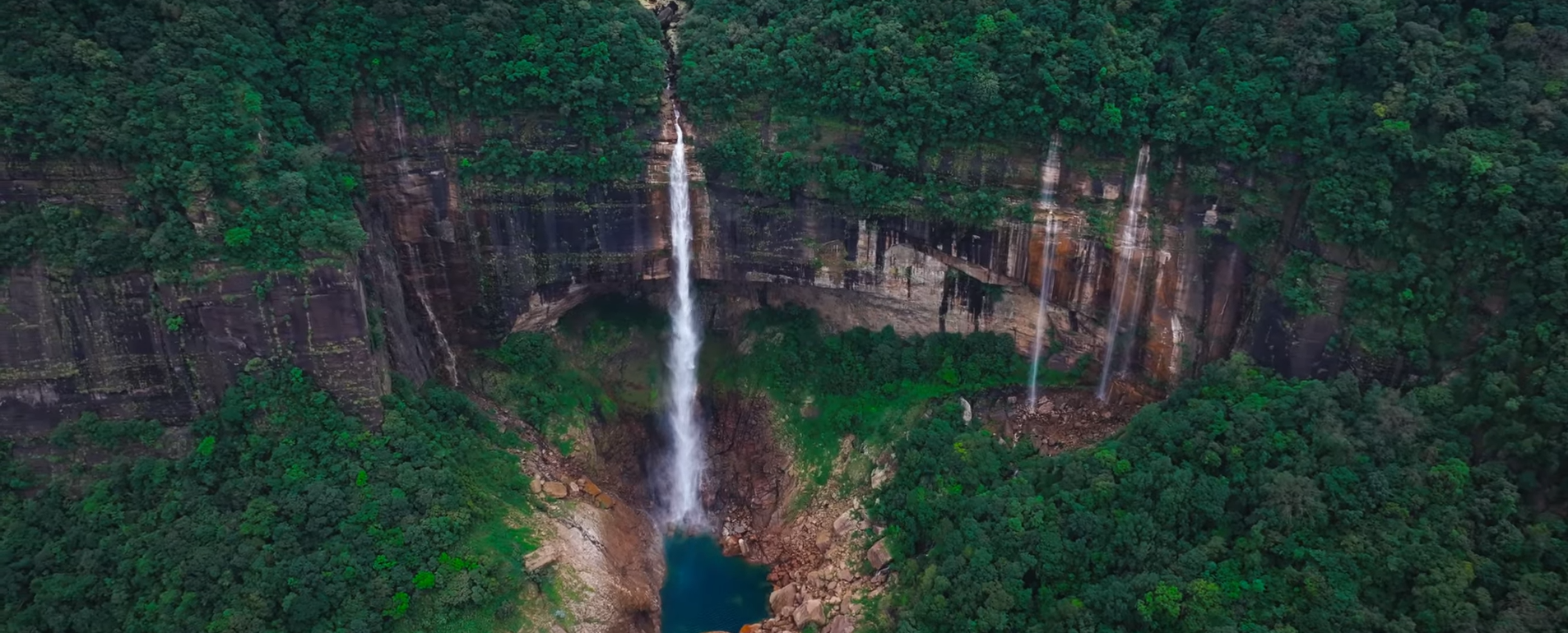
The area offers numerous attractions worth exploring. Mawsmai Cave, one of Meghalaya's most accessible caves, features impressive stalactites and stalagmites. Nohkalikai Falls, India's tallest plunge waterfall, is nearby. The Mawkdok Bridge and Khoh Ramhah provide additional scenic opportunities. These attractions can easily be combined into a comprehensive day trip.
- Mawsmai Cave: Accessible cave with impressive formations
- Nohkalikai Falls: India's tallest plunge waterfall nearby
- Mawkdok Bridge: Scenic viewpoint
- Khoh Ramhah: Additional natural attraction
Cultural Context and Tourism
Community and Sustainability
Local communities play essential roles in managing tourism. Khasi guides offer knowledge of the area's history, legends, and natural features. Local vendors sell regional products, handicrafts, and refreshments, ensuring tourism benefits flow to the community.
Meghalaya Tourism has implemented measures balancing accessibility with conservation. The eco park model concentrates visitor impact in managed areas while protecting the environment. Waste management systems, designated pathways, and educational signage minimise environmental impact.
Planning Your Visit
Accommodation and Cuisine
Sohra offers accommodation options from basic guesthouses to comfortable hotels. Many offer valley views and easy access to attractions. Booking in advance is recommended, especially during peak season from June to November.
The Cherrapunji area provides opportunities to experience authentic Khasi cuisine. Traditional dishes featuring rice, pork, and local vegetables offer a taste of regional culinary heritage. Small restaurants serve both local and familiar options.
Nohsngithiang Falls Location on Google Map
Frequently Asked Questions (FAQ)
How tall is Nohsngithiang Falls?
Nohsngithiang Falls has a drop of 315 meters (1,033 feet) with an average width of 70 meters (230 feet), making it one of India's tallest waterfalls.
Why is it called Seven Sisters Falls?
The waterfall is called Seven Sisters Falls because it cascades in seven distinct segments. These seven segments symbolically represent Northeast India's seven sister states: Arunachal Pradesh, Assam, Manipur, Meghalaya, Mizoram, Nagaland, and Tripura.
Where is Nohsngithiang Falls located?
Nohsngithiang Falls is located in East Khasi Hills district of Meghalaya, just 1 km south of Mawsmai village and approximately 4 km from Sohra (Cherrapunji), about 60.7 km from Shillong.
What is the best time to visit Nohsngithiang Falls?
The best time to visit is during the monsoon season from June to September when all seven segments flow with full force. The post-monsoon period of October and November also offers substantial flow with clearer weather for better visibility.
What makes Nohsngithiang Falls unique?
Nohsngithiang Falls is unique for its seven-segmented structure that cascades parallel down limestone cliffs. The falls are entirely rain-fed, and the seven segments symbolically represent the unity of Northeast India's seven sister states.
Can you visit Nohsngithiang Falls at sunset?
Yes, sunset is one of the best times to visit. As the sun descends, it illuminates the cascading water in brilliant hues of orange, gold, and pink, creating a magical transformation that photographers and nature lovers find irresistible.
Conclusion
Nohsngithiang Falls stands as one of Meghalaya's crown jewels, a natural wonder combining spectacular beauty with cultural symbolism. The seven-segmented cascade represents both geological magnificence and regional unity, offering visitors an experience resonating on multiple levels. Whether captivated by the sheer scale, moved by the symbolic connection to Northeast India's identity, or seeking to witness nature's impressive displays, Nohsngithiang Falls delivers an unforgettable encounter. The combination of dramatic scenery, cultural significance, and magical sunset illumination makes this waterfall a must-visit destination for anyone exploring Meghalaya's wonders.

Traveller Reviews
Read genuine visitor reviews or share your own experience to help fellow travellers