Raigad Fort – The Gibraltar of the East
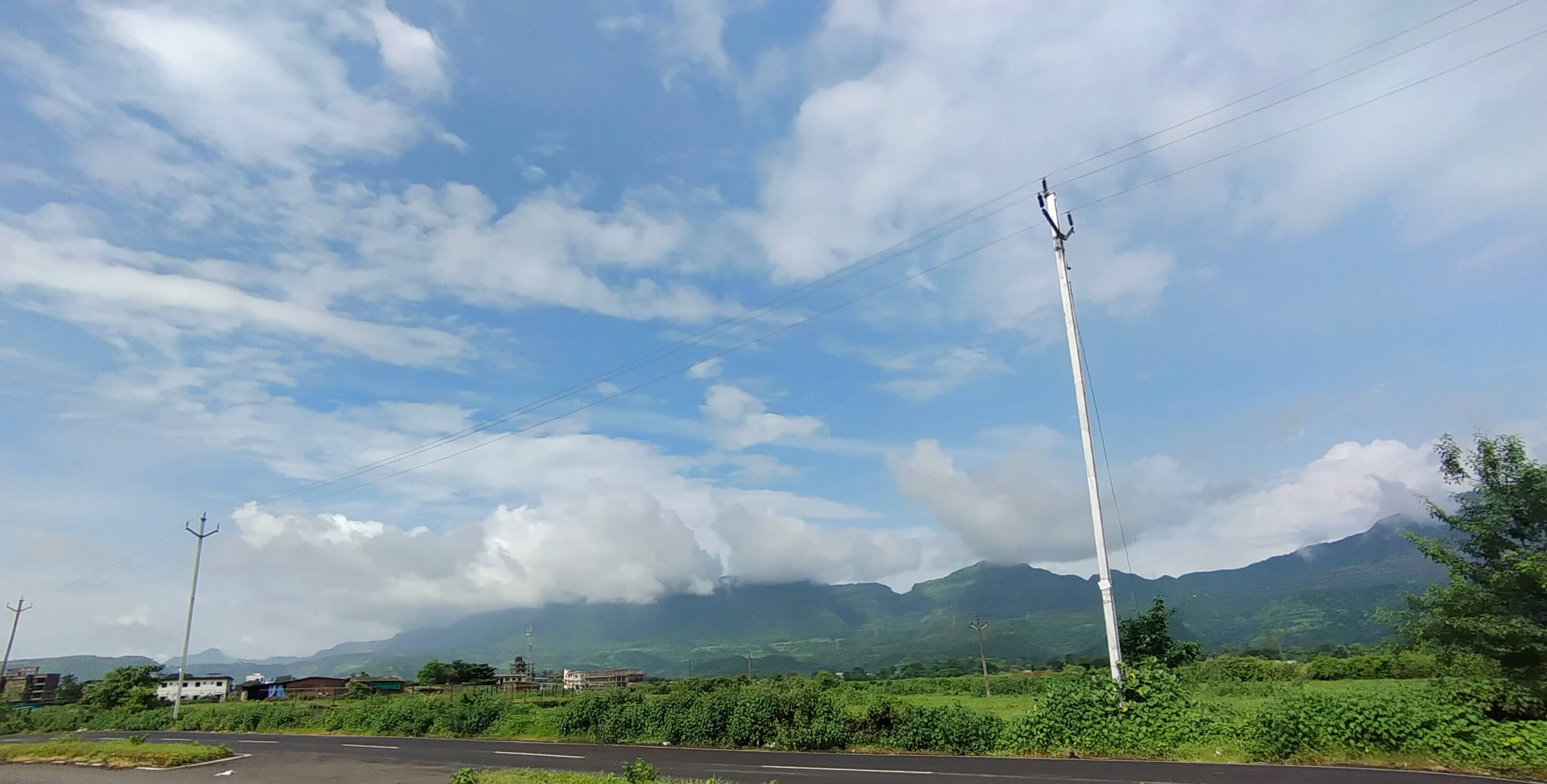
Raigad Fort, also known as the "Gibraltar of the East," is one of the most historically significant forts in Maharashtra and a jewel of Maratha military architecture. Located in the Raigad district of Maharashtra, this magnificent hill fort served as the capital of Chhatrapati Shivaji Maharaj's Maratha Empire and witnessed the birth of one of India's greatest dynasties.
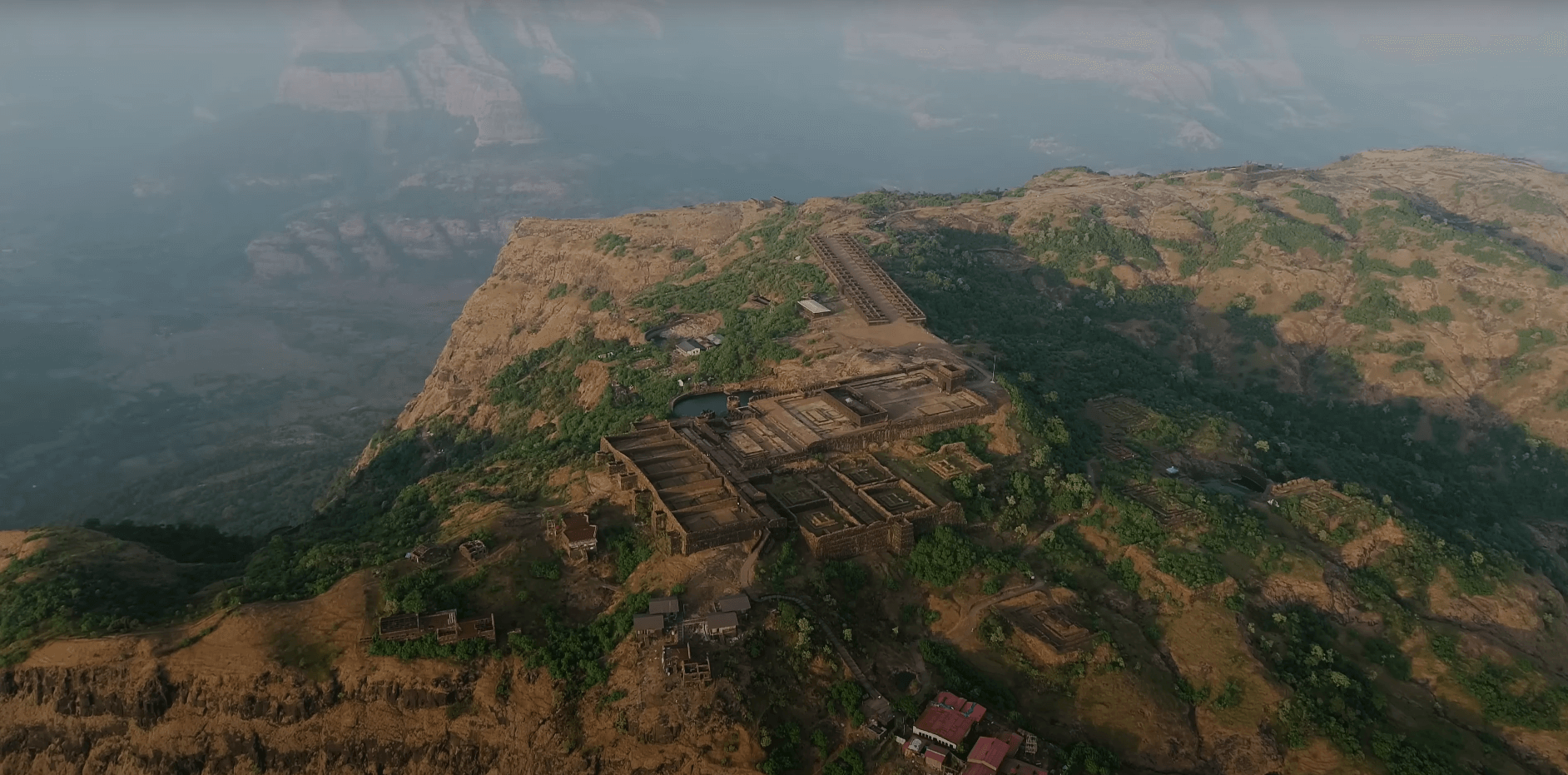
Standing tall at an altitude of 2,700 feet (820 meters) above sea level, the fort occupies approximately 1,200 acres and offers panoramic views of the surrounding Sahyadri mountain ranges and lush greenery. If you are planning a heritage trip, an adventurous trek, or exploring Maharashtra's rich historical sites, Raigad Fort is an absolute must-visit destination.
Raigad Fort History – From 11th Century to Maratha Glory
The history of Raigad Fort spans over a millennium, witnessing transformations from a regional stronghold to the heart of the Maratha Empire:
Early Origins (11th Century)
The fort's earliest structures date back to the 11th century Maurya dynasty period. However, it remained relatively unknown until Chandraraoji More, a regional feudal lord, fortified and controlled it during the medieval period.
Shivaji's Transformation (1656 CE)
The pivotal moment in Raigad's history came in 1656 CE when the young and ambitious Chhatrapati Shivaji Maharaj defeated Chandraraoji More in battle and seized control of the fort. Recognizing the strategic and defensive potential of the hilltop, Shivaji renamed it from "Rairee" to "Raigad" (meaning "royal fort") and initiated a massive transformation.
From 1656 to 1674, Shivaji invested enormous resources and employed the brilliant architect Hiroji Indulkar to expand and modernize the fort. The construction was relentless—over 18 years, the fortress evolved from a simple fortification into an impenetrable military stronghold and functioning capital city.
The Coronation – Birth of the Maratha Empire (1674 CE)
On June 6, 1674 CE, Chhatrapati Shivaji Maharaj was formally crowned as the Chhatrapati (paramount ruler) at Raigad Fort in a grand ceremony. This coronation marked the official birth of the Maratha Empire and the establishment of Hindavi Swarajya (self-rule)—a concept that inspired generations and challenged the dominance of the Mughal Empire.
The ceremony was attended by nobles, military leaders, and representatives from across the Maratha territories. The royal throne was reportedly studded with diamonds and gold, adorned on eight golden columns worth approximately 1,000 kg of gold.
Post-Shivaji Era
After Shivaji Maharaj's death in 1680, Raigad Fort remained the capital under his successors. However, political turmoil and succession disputes weakened Maratha unity. The fort eventually fell into the hands of the Mughals and later the British. Though partially ruined today, its remains still reflect the grandeur and architectural brilliance of the Maratha era.
Raigad Fort Information – Quick Reference
Key Details at a Glance
📍 Location: Raigad district, Maharashtra, India (18.3698°N, 73.2915°E)
📏 Height: 2,700 feet (820 meters) above sea level
📐 Area: Approximately 1,200 acres
🏗️ Built By: Originally by Chandraraoji More; expanded & renovated by Chhatrapati Shivaji Maharaj
🗓️ Built/Expanded: 11th century (original); 1656–1674 CE (Shivaji era)
🎨 Architecture Style: Maratha military architecture with advanced defensive systems
⭐ Significance: Capital of the Maratha Empire, Coronation site of Chhatrapati Shivaji Maharaj (1674 CE)
🏛️ Heritage Status: Protected Monument, UNESCO World Heritage consideration
Raigad Fort Architecture – Maratha Military Engineering Excellence
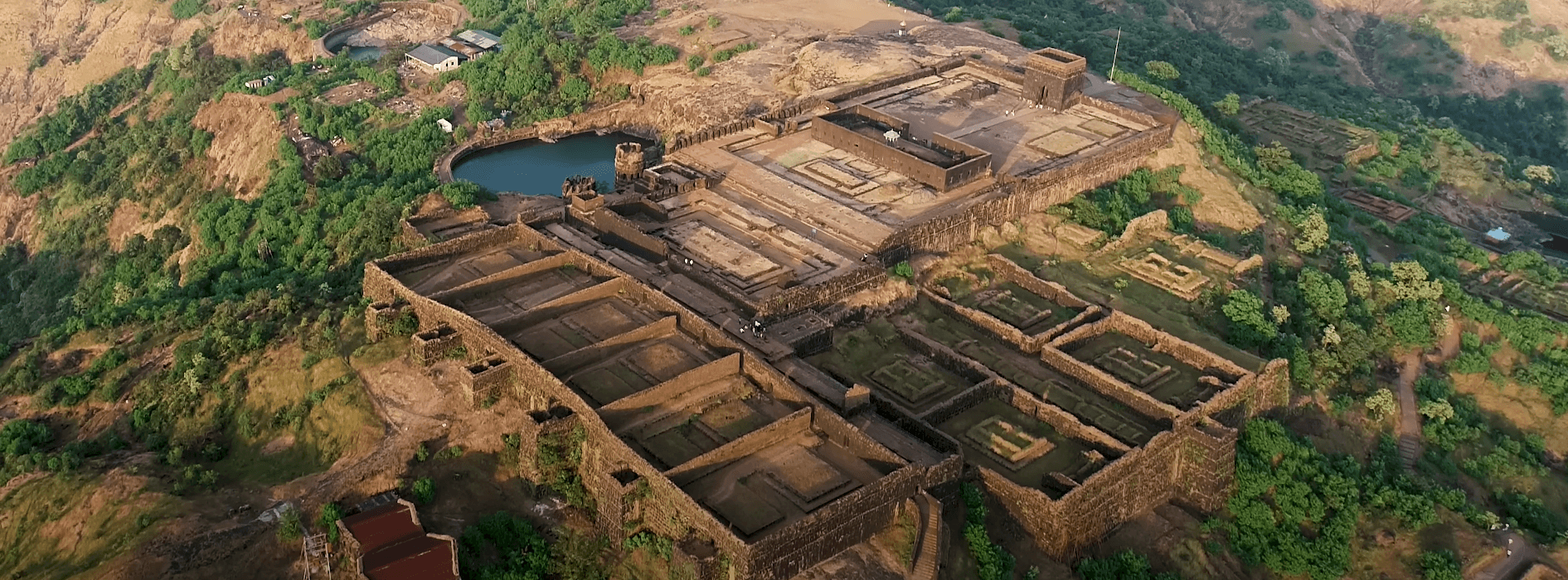
Raigad Fort is an architectural marvel that seamlessly blends military functionality with administrative efficiency. The fort's design showcases the genius of Hiroji Indulkar, Shivaji's master architect and chief engineer, who revolutionized fortification design in India.
Building Techniques & Construction Materials
The fortress was constructed using advanced techniques for its era:
- Laterite & Basalt Quarrying: Large stone blocks were extracted from local quarries and meticulously dressed by skilled masons
- Dry-Stack Masonry: Stones were interlocked without mortar, providing structural integrity and flexibility during earthquakes
- Lime Mortar Application: Limestone-based mortar was selectively applied at critical junctions and defensive positions
- Strategic Material Transport: Heavy materials were transported up 2,700 feet using temporary inclined planes, pulleys, and manual labor
Major Architectural Structures
| Structure | Description & Significance |
|---|---|
| Maha Darwaja (Main Gate) | Massive basalt pillars with reinforced wooden doors studded with iron. Designed defensively rather than decoratively, featuring narrow passages to slow invaders |
| Royal Palace | Six interconnected chambers designed by Hiroji Indulkar. No external windows for security; access via internal passages. Originally constructed with wood and stone |
| Rajasabha (Assembly Hall) | Octagonal canopy marking the original throne position. The throne was reportedly studded with diamonds and gold on 8 golden columns (~1,000 kg total) |
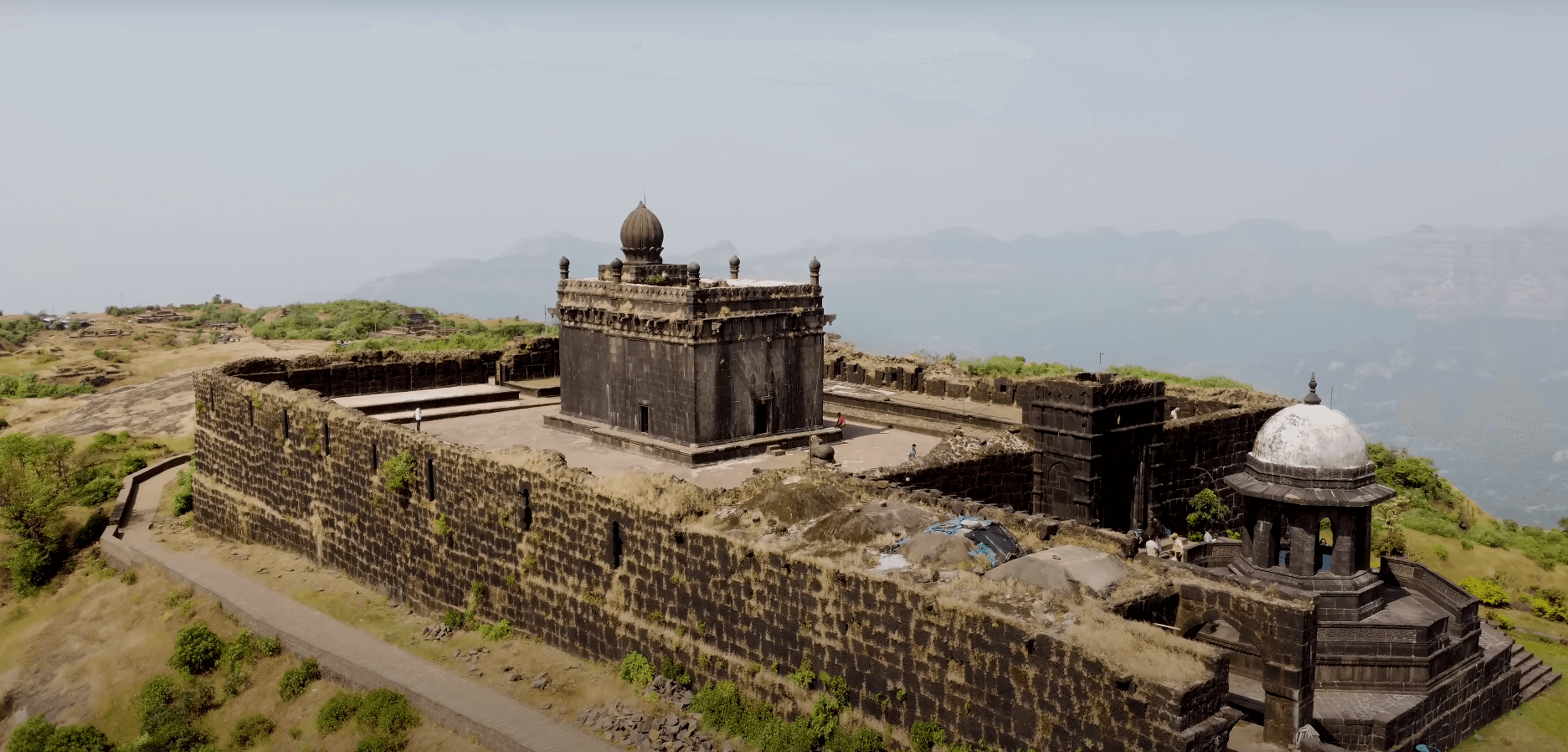
| Jagdishwar Temple | Rectangular enclosure with elaborate eastern entrance. Original construction in timber and terracotta; renovations later added stone elements. Houses Shivaji Maharaj Samadhi |
| Hirkani Buruj (Secret Pathway) | Famous escape route with a touching legend of Hirkani, a brave woman who reportedly climbed down the fort walls at night to reach her child. Used as tactical advantage point |
| Underground Passages | Secret tunnels connecting royal residence to administrative areas and escape routes. Enabled rapid troop movement during emergencies |
| Water Tanks & Cisterns | Multiple reservoirs carved into rock to collect monsoon water; ensured 6+ months water supply during sieges |
| Storehouses & Granaries | Strategic grain storage locations to withstand prolonged attacks. Separate compartments prevented spoilage |
| 62 Bastions & Watchtowers | Defensive structures positioned at vantage points. Allowed 360-degree surveillance and overlapping arrow fire coverage |
| Fortification Walls | Multiple concentric rings of defensive walls; varying heights and thicknesses to absorb cannon fire |
Strategic Defensive Features
Raigad Fort's greatest strength lies in its defensive positioning and engineering:
- Natural Protection: Encircled by deep valleys on three sides with only one steep, winding access path
- Chokepoint Design: The 1,737-step pathway funnels attackers into predetermined positions where defenders maintain complete tactical advantage
- Overlapping Fields of Fire: 62 bastions positioned to provide overlapping arrow and cannon fire coverage
- Multiple Fortification Layers: Three distinct defensive gates separated by courtyards; each gate could be defended independently
- Secret Escape Routes: Underground passages and the famous Hirkani Buruj enabled rapid evacuation if needed
Hiroji Indulkar – The Genius Architect Behind Raigad
Hiroji Indulkar was Chhatrapati Shivaji Maharaj's chief architect and master engineer who transformed Raigad Fort from a simple fortification into an architectural masterpiece. Historical inscriptions in Modhi script, particularly on the steps of Jagdishwar Temple, document Indulkar's contributions.
Hiroji Indulkar's Construction Legacy
Over 18 years (1656–1674), Indulkar oversaw construction of:
- Hundreds of public and private buildings within the fort complex
- Multiple royal palaces and mansions with sophisticated architectural design
- Royal mint facility for currency production
- 300+ stone houses for military officers, administrators, and common residents
- Complex garrison installations with barracks, armories, and supply depots
- Extensive market complex stretching over a mile, supporting a thriving urban economy
Indulkar's design philosophy perfectly merged military functionality with administrative efficiency, creating a fortress that simultaneously served as an impenetrable stronghold, capital city, and bustling urban center supporting a population of approximately 5,000–10,000.
Raigad Fort Defensive Strategy & Military Engineering
Shivaji Maharaj stationed troops and artillery strategically within the fort's defensive walls. The fort's military layout represented cutting-edge fortification thinking for the 17th century:
Tactical Advantages
- Three-Sided Valley Enclosure: Natural moat created by surrounding valleys; only one practical assault approach
- Single Accessible Pathway: The 1,737-step ascent served as a chokepoint where defending troops maintained overwhelming tactical superiority
- Multi-Layer Defense: Three distinct defensive gates could each be held independently; enemies forced to breach multiple barriers
- Rapid Troop Movement: Underground passages and covered corridors enabled quick repositioning of defensive forces
- Ammunition Depots: Strategically placed storage of cannons, powder, and weapons throughout the fort
- High-Ground Advantage: 2,700-foot elevation provided superior vision and gave defenders first-strike advantage
This combination of natural terrain advantages and engineered defensive features made Raigad virtually impregnable for its era—no successful siege was ever mounted against the fort during Shivaji's lifetime.
Raigad Fort Ropeway – Modern Access to Historic Heights
To make this historic fort accessible to all visitors, modern infrastructure was added without compromising historical integrity.
Ropeway Technical Specifications
| Feature | Specification |
|---|---|
| Construction Period | November 1994 – March 1996 |
| Horizontal Span | 760 meters |
| Vertical Ascent | 420 meters |
| Motor Capacity | 52.22 kW |
| Cabin Weight | 100 kg (each) |
| Journey Duration | Approximately 4 minutes |
| Ticket Price | ₹300–400 per person (round trip) |
| Operating Hours | 9:00 AM – 6:00 PM (daily; subject to weather) |
| Museum Access | Museum created by Dr. Babasaheb Purandare with historical artifacts and exhibits |
The ropeway provides scenic aerial views of the fort, surrounding valleys, and Sahyadri peaks—offering the best option for tourists who want to enjoy the panoramic vistas without undertaking the challenging 1,737-step trek.
Raigad Fort Trek – Adventurous Ascent Through History
For adventure enthusiasts and history lovers, the Raigad Fort trek remains an unforgettable experience combining physical challenge with historical immersion.
Trek Details & Topography
The legendary 1,737-step ascent covering approximately 3 kilometers is historically significant—the steep, winding pathway was designed as a defensive mechanism. Invaders faced exhaustion while exposed to arrow fire from defensive positions above. The trek typically takes:
- 1.5–2 hours for average fitness levels (ascending)
- 1–1.5 hours for descent
- 2.5–3 hours for individuals with fitness challenges
Seasonal Trek Experience
Monsoon Season (June–September): The fort becomes even more mesmerizing as the entire region is covered with mist and lush greenery. However, it's essential to carry rain gear, wear sturdy shoes with good grip, and trek with caution due to slippery conditions.
Winter/Summer: Clearer visibility but exposed to direct sun. Early morning treks recommended to avoid heat.
Trek Safety Tips
- Wear sturdy, high-grip hiking boots
- Carry sufficient water (at least 2 liters per person)
- Pack high-energy snacks (energy bars, nuts, fruits)
- Carry a headlamp or torch for early morning/evening treks
- Trek in groups for safety
- Avoid trekking alone or during extreme weather conditions
- Inform someone of your trekking plans and expected return time
How to Reach Raigad Fort – Complete Travel Guide
Raigad Fort is well connected to major cities in Maharashtra by road and rail, making it accessible from multiple directions.
Distance from Major Cities
| Starting Point | Distance | Travel Time |
|---|---|---|
| Pune | 132 km | 2.5–3 hours |
| Mumbai | 170 km | 3.5–4 hours |
| Mahad | 25 km | 45 minutes |
| Mangaon | 28 km | 1 hour |
| Panvel | 110 km | 2 hours |
| Thane | 160 km | 3–3.5 hours |
Best Travel Routes
By Road (From Pune): Pune → Ahmednagar Road → Mahad → Pachad village (ropeway base). Via NH-48 and Regional Roads. Distance: 132 km; Duration: 2.5–3 hours
By Road (From Mumbai): Mumbai → Mumbai-Goa Highway (NH-66) → Mahad → Pachad village. This is the most popular route. Distance: 170 km; Duration: 3.5–4 hours
Nearest Railway Station: Mangaon Railway Station (on Konkan Railway line), approximately 28 km from Raigad Fort. From the station, hire a local taxi or take state transport buses to reach the fort.
By Bus: Regular state transport buses (MSRTC) operate from Pune, Mumbai, and Mahad directly to Raigad Fort and nearby villages.
Raigad Fort Weather and Best Time to Visit
The best time to visit Raigad Fort is between October and March when the weather is cool and pleasant, with clear skies offering excellent views.
Seasonal Guide
| Season | Months | Weather | Best For |
|---|---|---|---|
| Summer | March–May | Warm and hot; temperatures 30–38°C | Early morning visits; stay hydrated |
| Monsoon | June–September | Heavy rainfall; lush greenery; misty views | Photography; experienced trekkers; prepare for slippery trails |
| Winter | October–February | Cool and pleasant; clear skies; 15–25°C | Perfect for trekking, sightseeing, photography; peak tourist season |
Shivaji Maharaj & Raigad Fort – Symbol of Swarajya
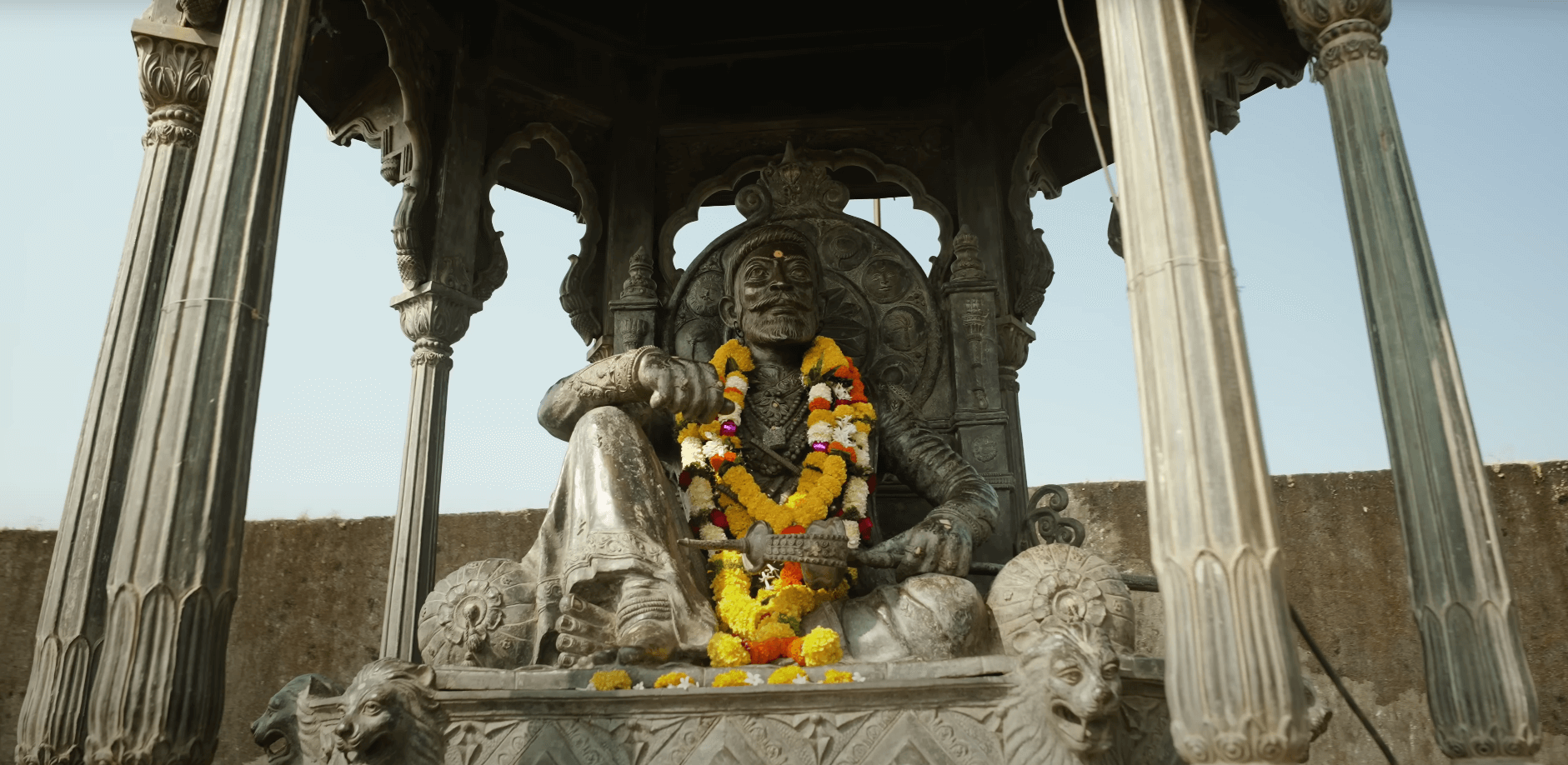
Raigad Fort is inseparable from the name Chhatrapati Shivaji Maharaj. This was the fort where he envisioned Swarajya (self-rule) and established the foundation of the Maratha Empire. The Shivaji Maharaj Samadhi at Raigad is located close to the Jagdishwar Temple, where visitors pay their respects to the great warrior-king who challenged Mughal supremacy.
Shivaji's Coronation Significance
The 1674 coronation ceremony at Raigad Fort was not merely a religious or ceremonial event—it was a revolutionary political statement. In an era dominated by the Mughal Empire, Shivaji's coronation established an independent Hindu kingdom with its own governance, military, and administrative systems. This act inspired resistance movements across India and laid the groundwork for the Maratha Confederacy that would eventually challenge Mughal hegemony.
A life-sized statue of Shivaji Maharaj stands proudly near the fort entrance, inspiring every visitor with his legendary courage and vision of self-governance.
Raigad Fort Photography Guide
Raigad Fort is a paradise for photographers and history lovers. The stunning vistas, ancient architecture, and historical significance create endless photography opportunities.
Best Photography Spots & Timing
- Sunrise Shots: From Louisa Point viewpoint; golden light illuminates the Sahyadri peaks (5:30–6:30 AM)
- Sunset Photography: Best from fort ramparts; creates silhouettes of the valley (5:00–6:30 PM)
- Maha Darwaja: Architectural close-ups; best in morning light with dramatic shadows
- Jagdishwar Temple: Religious and architectural elements; mid-morning for balanced lighting
- Aerial Views: Via ropeway cabin or drone (if permitted); captures entire fort layout
- Monsoon Photography: Misty valleys, green landscapes, dramatic cloud formations (June–September)
Photography Tips
- Use wide-angle lenses for landscape and fort overview shots
- Bring neutral density filters for long-exposure sunset photography
- Pack extra batteries due to cold temperatures at 2,700 ft elevation
- Golden hour (sunrise/sunset) provides the best natural light
- Monsoon creates dramatic backdrops but requires weather-sealed equipment
- Check drone regulations with local authorities before flying
Raigad Fort Natural Reserve & Biodiversity
The fort and its surrounding hills form the Raigad Fort Natural Reserve, a protected area rich in flora and fauna. This region is home to dense forests, rare birds, natural springs, and unique plant species endemic to the Western Ghats.
Flora & Fauna
- Bird Species: Shaheen falcon, golden eagle, Asian paradise flycatcher, Malabar pied hornbill
- Mammals: Sambar deer, wild boar, porcupine, mongoose, Indian civet
- Flora: Rare orchids, ferns, medicinal plants, endemic Western Ghats vegetation
- Natural Springs: Multiple water sources throughout the fort area, historically crucial for water supply
The reserve adds to the scenic beauty of Raigad, making it not just a historical site but also a natural retreat for eco-tourism enthusiasts.
Hotels and Accommodation Near Raigad Fort
If you plan to stay overnight or extend your visit, there are several hotels near Raigad Fort and budget homestays that offer comfortable accommodation at various price ranges.
Popular Stay Options
| Accommodation | Type | Location | Features |
|---|---|---|---|
| MTDC Resort, Raigad | Resort | Pachad village | Government-run; basic amenities; budget-friendly; scenic location |
| Raigad Fort Resort & Restaurant | Resort | Near Pachad | Multi-cuisine restaurant; comfortable rooms; valley views |
| Shivaji Trail Homestay | Homestay | Pachad | Traditional setup; authentic experience; home-cooked meals |
| Hotel Raigad Darshan | Hotel | Mahad | 3-star hotel; 25 km from fort; modern amenities |
| Camping Sites | Camping | Base village | Adventure camping; bonfire; stargazing; budget option |
| Budget Guesthouses | Guesthouse | Pachad & nearby | Local family-run; very affordable; basic facilities |
For backpackers and budget travelers, camping near the base village or staying in local guesthouses is a popular choice. Many homestays offer authentic experiences with home-cooked Maharashtrian meals.
Places to Visit Near Raigad Fort
Apart from exploring Raigad Fort itself, there are several attractions nearby that make perfect additions to your itinerary:
Nearby Attractions
- Mahad Town (25 km): Known for historic Gandharpale Caves with rock-cut sculptures and ancient temples. Mahad also has a vibrant local market and restaurants
- Varandha Ghat (30 km): A scenic mountain pass offering breathtaking views of valleys and terraced farms. Popular photography location, especially during monsoon
- Murud Janjira Fort (80 km): A sea fort located on an island in the Arabian Sea; accessible by boat from Murud beach. Another iconic Maratha stronghold
- Harihareshwar Beach (60 km): Coastal town with beach, temple, and water sports; perfect for a coastal getaway after fort visit
- Shrivardhan Beach (65 km): Picturesque beach town with historical significance; ideal for sunset viewing
- Kashid Beach (75 km): Less crowded beach with crystal-clear waters; perfect for swimming and water sports
These nearby destinations make Raigad a perfect weekend trip from Pune or Mumbai, combining history, nature, and coastal experiences.
Interesting & Lesser-Known Facts About Raigad Fort
- 1,737 Steps: The fort has more than 1,737 steps leading to the top; each step has a story of Maratha resilience
- 62 Bastions: The fort once had 62 bastions (defensive walls) surrounding it, making it one of the most fortified positions in medieval India
- Hirkani Legend: The hidden pathway called Hirkani Buruj has a touching legend of a woman named Hirkani who climbed down the fort walls to reach her child at night
- Impregnable Design: The fort's design ensured natural protection from invaders; no successful siege was ever mounted during Shivaji's reign
- Royal Gold Throne: The coronation throne was reportedly studded with diamonds and gold on 8 golden columns weighing approximately 1,000 kg
- 3D Models in Schools: The Raigad Fort 3D model is widely used in Indian schools to teach about Maratha history and medieval military architecture
- Ropeway Engineering: The ropeway construction in 1994–1996 was a marvel of engineering, maintaining historical integrity while providing modern access
- Strategic Location: Built at 2,700 feet elevation with natural valleys on three sides; choosing higher ground for defensive advantage
FAQs About Raigad Fort
1. Where is Raigad Fort located?
Raigad Fort is located in the Raigad district of Maharashtra, approximately 25 km from Mahad town. GPS coordinates: 18.3698°N, 73.2915°E. The nearest major cities are Pune (132 km) and Mumbai (170 km).
2. Who built Raigad Fort?
The fort was originally built by Chandraraoji More in the 15th century. However, it was significantly expanded and modernized by Chhatrapati Shivaji Maharaj between 1656–1674 CE. The master architect Hiroji Indulkar designed and oversaw much of the construction under Shivaji's reign.
3. How many steps are there in Raigad Fort?
There are approximately 1,737 steps to reach the top of Raigad Fort from Pachad village base. These steps wind up the steep hillside and were historically designed as a defensive mechanism.
4. What is the height of Raigad Fort?
Raigad Fort stands at a height of approximately 2,700 feet (820 meters) above sea level, making it one of the highest hill forts in Maharashtra.
5. What is the best time to visit Raigad Fort?
The best time to visit is between October and March when the weather is cool and pleasant (15–25°C), with clear skies offering excellent views. Winter months (December–February) see peak tourist footfall.
6. Is there a ropeway at Raigad Fort?
Yes, the Raigad Fort ropeway was constructed between November 1994 and March 1996. It spans 760 meters horizontally and ascends 420 meters vertically, completing the journey in approximately 4 minutes. Ticket price: ₹300–400 per person (round trip).
7. What is special about Raigad Fort?
Raigad Fort is special for multiple reasons: (1) It was the capital of the Maratha Empire; (2) Shivaji Maharaj's coronation ceremony in 1674 CE took place here, marking the birth of Hindu self-rule; (3) The fort houses Shivaji Maharaj's Samadhi; (4) It's an architectural marvel showcasing medieval Maratha military engineering; (5) No successful siege was ever mounted against it during Shivaji's lifetime.
8. How long does it take to trek to Raigad Fort?
The trek typically takes 1.5–2 hours to ascend and 1–1.5 hours to descend, depending on individual fitness levels. The trek distance is approximately 3 kilometers through steep, winding pathways.
9. Can children visit Raigad Fort?
Yes, children can visit. However, the trek is challenging for young children (under 8 years). The ropeway is recommended as an easier alternative. Ensure proper footwear, water, and snacks for comfort.
10. Is photography allowed at Raigad Fort?
Yes, photography is allowed throughout the fort for personal use. However, if you're using professional equipment or drones, you may need to check with local authorities for specific permissions.
11. What is the entry fee for Raigad Fort?
There is no separate entry fee for the fort itself. However, ropeway charges apply: ₹300–400 per person (round trip). Some local guides may charge for guided tours (₹200–500 depending on duration).
12. Are there water sources during the trek?
There are very limited water sources on the trek. It's essential to carry sufficient water (at least 2 liters per person) before starting. Some vendors may be available near the base, but it's safer to carry your own supply.
Raigad Fort Travel Itinerary – 1-2 Day Trip
Day 1: Fort Exploration
- 6:00 AM: Start early from Pune or Mumbai; drive to Pachad village (ropeway base)
- 10:00 AM: Arrive at base; grab breakfast; start trek or take ropeway
- 11:30 AM–12:30 PM: Explore main fort structures: Maha Darwaja, Rajasabha, Royal Palace
- 1:00–2:00 PM: Lunch break; visit Jagdishwar Temple and Shivaji Samadhi
- 2:30–4:30 PM: Explore bastions, water tanks, and defensive structures; photography
- 5:00 PM: Descend via ropeway or trek; visit museums
- 6:30 PM: Return to Pachad village; stay overnight or begin return journey
Day 2 (Optional): Nearby Attractions
- Morning: Visit Mahad town; explore Gandharpale Caves (20 km away)
- Midday: Stop at Varandha Ghat for scenic views; photography
- Afternoon: Head to Murud Janjira Fort or nearby beaches
- Evening: Return to Pune or Mumbai
Practical Travel Tips for Raigad Fort Visit
Packing Essentials
- Sturdy hiking boots with good grip (essential for trek safety)
- Minimum 2 liters of water per person
- High-energy snacks (energy bars, nuts, dry fruits, chocolate)
- Sunscreen (SPF 50+) and hat (sun exposure at 2,700 ft elevation)
- Rain gear and umbrella (if visiting during monsoon)
- Light jacket (temperature drops at higher elevations)
- Headlamp or torch (for early morning/evening treks)
- First-aid kit (bandages, pain relievers, blister treatment)
- Camera and extra batteries
- Portable phone charger
Important Reminders
- Start treks early (5:30–6:30 AM) to avoid afternoon heat and ensure daylight for descent
- Inform someone of your trek plans and expected return time
- Trek with companions; avoid solo trekking for safety
- Respect historical structures; don't vandalize or touch ancient inscriptions
- Follow leave-no-trace principles; carry all garbage with you
- Respect local culture and religious sites (Jagdishwar Temple)
- Check weather forecasts before visiting; avoid monsoon if you're inexperienced
- Wear weather-appropriate clothing; layers are recommended
Conclusion
Raigad Fort stands as a living testament to the courage, vision, and architectural brilliance of Chhatrapati Shivaji Maharaj and his empire. From its majestic architecture designed by Hiroji Indulkar to its deep-rooted connection with the birth of the Maratha Empire, the fort continues to inspire generations of Indians.
Whether you're an adventurer seeking physical challenge, a history lover exploring medieval military engineering, a photographer capturing natural beauty, or a traveler seeking peace amidst history and nature, Raigad Fort offers a perfect blend of heritage, beauty, and bravery.
The 1,737 steps to the summit represent not just physical elevation but a journey through centuries of Indian history. Every corner of the fort echoes with stories of self-rule, sacrifice, and the eternal spirit of Swarajya.
If you're exploring forts in Maharashtra or planning a heritage trip, Raigad Fort should definitely top your list. Plan your visit today, and experience the majesty of the fort that inspired a nation.