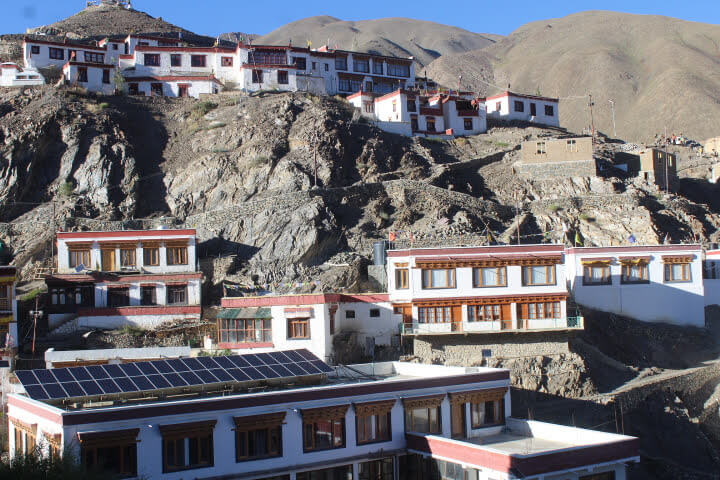
Perched dramatically on a rocky hillside above the Shyok River valley, Diskit Monastery (Diskit Gompa) stands as the oldest and largest Buddhist monastery in Nubra Valley, Ladakh. Founded in the 14th century and home to the majestic 106-foot Maitreya Buddha statue, this ancient Gelugpa monastery offers visitors an unforgettable journey into Tibetan Buddhist culture, breathtaking Himalayan landscapes, and centuries of spiritual heritage.
Quick Facts About Diskit Monastery
- Location: Diskit Village, Nubra Valley, Leh District, Ladakh
- Altitude: 10,315 feet (3,144 meters)
- Distance from Leh: 115-120 km (5-6 hours drive via Khardung La Pass)
- Founded: 14th century (approximately 1420 CE)
- Founder: Changzem Tserab Zangpo, disciple of Je Tsongkhapa
- Buddhist Sect: Gelugpa (Yellow Hat) School
- Main Attraction: 32-meter (106-foot) Maitreya Buddha statue
- Timings: 7:00 AM - 7:00 PM (daily)
- Entry Fee: Free (donations welcome)
- Best Time to Visit: May to September
History and Spiritual Significance
Foundation and Legacy
Diskit Monastery was established in the early 14th century by Changzem Tserab Zangpo, a revered disciple of Je Tsongkhapa, the founder of the Gelugpa (Yellow Hat) order of Tibetan Buddhism. This makes Diskit not just the oldest monastery in Nubra Valley, but also one of the most historically significant religious sites in Ladakh.
During the reign of King Grags-pa-'bum-lde (1400-1440), Nubra Valley was under the control of local ruler Nyig-ma-grags-pa, who provided crucial support for establishing the monastery. In the mid-18th century, King Tshe-dbang-rnam-rgyal transferred control to the Rinpoche of Thikse Monastery, making Diskit a sub-gompa of Thikse—an arrangement that continues today.
Strategic Location on the Silk Route
Diskit's location placed it along one of the most important branches of the ancient Silk Route. Caravans traveling between Leh, Tibet, and Central Asian trading centers like Yarkand would pass through this valley. The monastery served as a spiritual waystation for traders and travelers, offering blessings and shelter along treacherous mountain routes.
Sanctuary During Conflicts
Throughout its 600-year history, Diskit Monastery has witnessed numerous conflicts. During the Mughal invasion of Ladakh in 1684, the monastery stood resilient with support from King Sengge Namgyal. During the India-Pakistan conflicts, given Nubra Valley's proximity to the Line of Control, Diskit provided crucial shelter to civilians from both sides. This humanitarian role has added another layer to the monastery's significance as a sanctuary of peace.
The Legend of the Mongol Demon
One of the most fascinating legends involves an anti-Buddhist Mongol demon who allegedly terrorized the region. According to local lore, this malevolent entity vowed revenge against Buddhism and made several attempts to destroy the monastery. Monks eventually defeated the demon after multiple resurrections. Today, visitors can see what are believed to be the wrinkled head and hand of this demon preserved inside a temple chamber—symbolizing the ultimate triumph of Buddhist dharma over forces of chaos.

Architecture and Main Attractions
Monastery Complex
The monastery complex sprawls across multiple levels connected by narrow stone staircases winding up the rocky slope. Built in traditional Tibetan architectural style, it features whitewashed walls with distinctive red and gold details.
Main Prayer Hall (Dukhang)
The prayer hall houses several important religious artifacts:
- Crowned Buddha Statue (Cho Rinpoche): The principal deity representing the Buddha in his sambhogakaya form
- Giant Ceremonial Drum: Used during prayer ceremonies, its deep resonance echoes throughout the valley
- Ancient Thangkas: Religious scroll paintings depicting Buddhist deities, mandalas, and Buddha's life
- Vibrant Murals and Frescoes: Covering the walls with Buddhist teachings and guardian deities, though many have darkened with soot from centuries of butter lamps
Upper Floor and Special Features
The second floor contains shrines dedicated to fierce guardian deities (dharmapala) who protect the monastery. An elevated cupola features a detailed fresco depicting Tashilhunpo Monastery in Tibet, reinforcing Diskit's place within the broader Tibetan Buddhist tradition. The monastery also houses ancient Buddhist texts in Tibetan and Mongolian languages.
The Magnificent Maitreya Buddha Statue
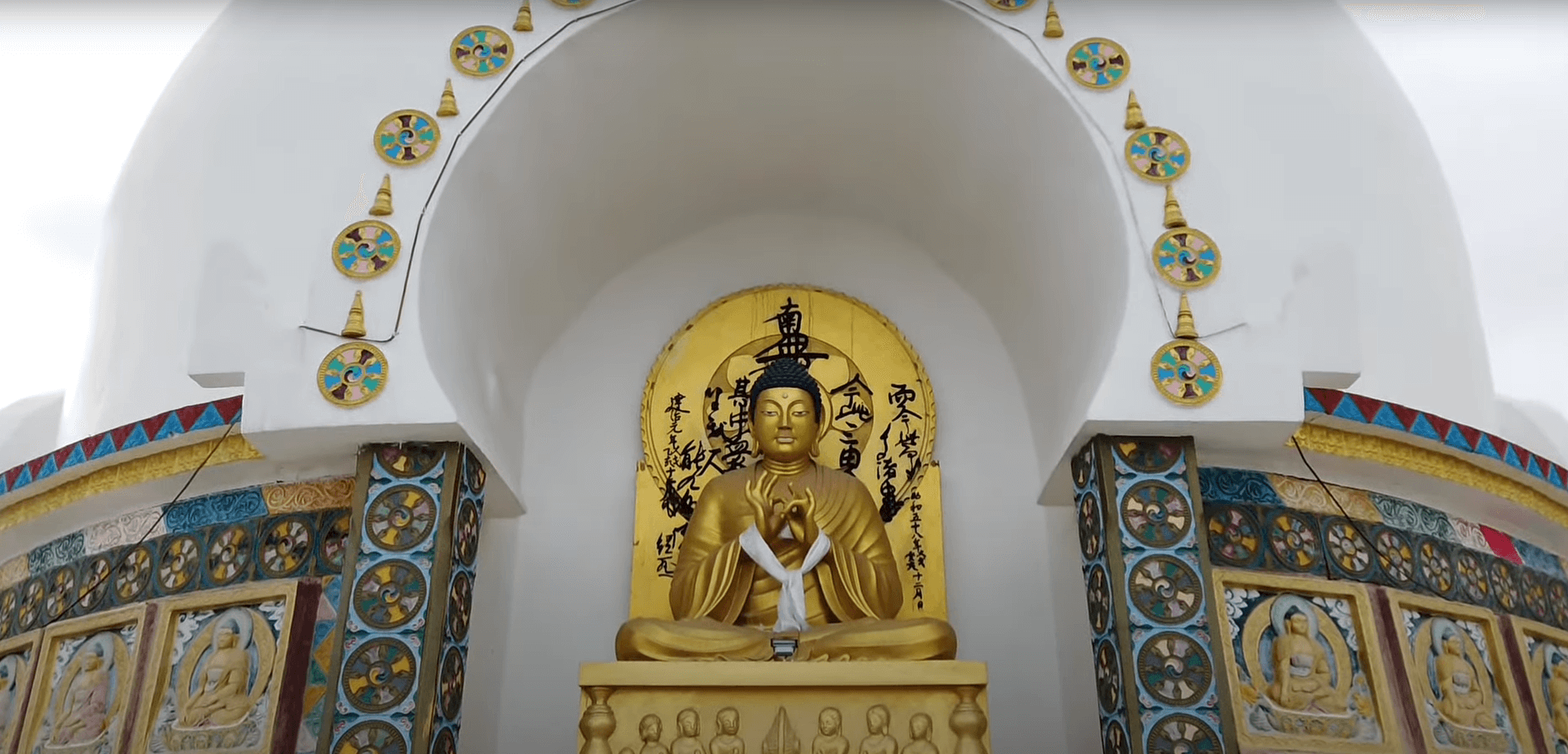
Rising 32 meters (106 feet) above the hillside, the golden Maitreya Buddha statue is Nubra Valley's most iconic landmark. Construction began in April 2006, funded primarily through local donations. Ganden Thipa, head of the Gelugpa sect, contributed 8 kilograms of gold for decoration. The Dalai Lama personally consecrated the statue on July 25, 2010.
The statue faces down the Shyok River valley toward Pakistan with three intentional purposes: protection of Diskit Village, prevention of further conflict with Pakistan, and promotion of world peace. Maitreya (Jampa in Tibetan) represents the future Buddha who will appear when current teachings have been forgotten.
Visitors can climb to the statue platform for panoramic views of Nubra Valley, the Shyok River, and snow-capped Karakoram mountains. The statue is visible from throughout Diskit and even from Hunder, 7 kilometers away. Sunrise and sunset create particularly stunning lighting for photography.
Lachung Temple
Just above the main monastery sits Lachung Temple, one of the oldest temples in Nubra Valley. This smaller shrine contains a large idol of Je Tsongkhapa crowned with the distinctive yellow Gelugpa hat, offering a quieter space for contemplation with expansive valley views.
Monastic Life and Education
Approximately 100 monks reside at Diskit, following traditional Tibetan Buddhist schedules with pre-dawn prayers, philosophical study, debate practice, and meditation. Visitors arriving during morning or evening prayer times (6-7 AM and 6-7 PM) can observe powerful ceremonies with deep chanting and traditional instruments.
The monastery operates a school providing free education to Tibetan children, supported by Lungta, a Czech NGO. The school offers modern computer facilities, science education in English, traditional Buddhist philosophy, and Tibetan language instruction. This initiative demonstrates how Diskit continues its role as a center of learning while preserving Tibetan culture.
Dosmoche Festival: Victory of Good Over Evil
Every February, Diskit hosts the Dosmoche Festival (Festival of the Scapegoat), one of Ladakh's most important religious celebrations. The festival ritually expels negative forces accumulated during the past year, ensuring prosperity and spiritual well-being for the community.
The highlight is the spectacular Cham dance, performed by monks wearing elaborate costumes and colorful masks representing Buddhist deities, protectors, and demons. These ritual acts dramatize the eternal struggle between wisdom and ignorance, accompanied by traditional instruments like long horns, cymbals, and drums.
During Dosmoche, artisans create elaborate tormas (ritual sculptures from barley flour and butter) that are consecrated and cast out, symbolically carrying away all negativity. While the festival occurs during harsh winter, hardy travelers are rewarded with authentic cultural experiences as villagers from throughout Nubra Valley gather in traditional dress.

How to Reach Diskit Monastery
From Leh
Distance: 115-120 km | Travel Time: 5-6 hours
Route: Leh → Khardung La Pass → Khalsar → Diskit
The journey requires crossing Khardung La, one of the world's highest motorable passes at 17,582 feet. The Indian Army maintains this road, which can close due to snowfall (November-May), landslides, or extreme weather. Always check current road status before departing.
Required Permits
All visitors need an Inner Line Permit (ILP). Foreign tourists register at North Pullu checkpoint after descending Khardung La.
- Indian Nationals: Online permits through Ladakh tourism website or DC Office in Leh (₹20-50)
- Foreign Nationals: Permits in person or through agencies (₹400-500, valid 7 days, requires passport copy and 2+ person groups)
Transportation Options
- Private Taxi: ₹15,000-20,000 for 2-3 day trips (most comfortable)
- Shared Taxi: ₹1,000-1,500 per person one way (economical)
- Motorcycle: ₹1,200-2,000 per day rental (adventurous)
- Organized Tours: ₹8,000-15,000 per person for 2-3 days (hassle-free)
From Diskit village, a 15-20 minute uphill walk or short taxi ride reaches the monastery entrance, followed by stone steps to the main complex.
Best Time to Visit
Peak Season (May-September): Reliable pass access, pleasant temperatures (15-25°C), clear skies, but more crowded and expensive. June and September offer the best balance.
Shoulder Season (April, October): Fewer tourists, lower prices, crystal clear views, but unpredictable pass conditions.
Winter (November-March): Extremely cold, road often closed, but Dosmoche Festival in February offers unique cultural experiences for hardy travelers.
Nearby Attractions
- Hunder Sand Dunes (7 km): Famous for double-humped Bactrian camels and dramatic desert landscapes surrounded by snow peaks.
- Samstanling Monastery (18 km): Beautiful Gelugpa monastery in Sumur village with colorful murals and peaceful ambiance.
- Panamik Hot Springs (35 km): Natural sulfur hot springs believed to have healing properties.
- Turtuk Village (80 km): Scenic Balti village near Indo-Pak border with unique culture, apricot orchards, and stunning mountain views.
- Shyok River: Flowing through the valley, offering breathtaking landscapes and serene riverbanks ideal for photography.
Practical Travel Tips
- Altitude Acclimatization: Spend 2-3 days in Leh before visiting Diskit. Drink plenty of water, avoid alcohol, and ascend gradually.
- What to Wear: Layers are essential. Bring warm jacket even in summer, as mornings and evenings are cold. Comfortable walking shoes for monastery steps.
- Photography: Allowed in most areas, but ask permission before photographing monks. Interior photography may require small donations.
- Accommodation: Diskit village offers guesthouses, homestays, and hotels (₹800-3,000 per night). Book ahead during peak season. The monastery has limited guest rooms.
- Respect Monastery Etiquette: Remove shoes before entering prayer halls, walk clockwise around sacred structures, avoid pointing feet toward Buddha statues, dress modestly, and speak softly.
- Money: Limited ATMs in Nubra Valley. Carry sufficient cash from Leh. Most guesthouses don't accept cards.
- Mobile Connectivity: BSNL works best in Nubra Valley. Other networks have limited coverage.
Conclusion
Diskit Monastery represents the living heart of Nubra Valley's Buddhist heritage. Whether you're drawn by the towering Maitreya Buddha, the sacred chants echoing through ancient halls, the fascinating legend of the Mongol demon, or simply the tranquil majesty of the Himalayas, Diskit offers a profound spiritual and cultural experience. The monastery's role as both ancient meditation center and modern educational institution demonstrates how Tibetan Buddhism continues to evolve while maintaining its essential wisdom traditions.
Plan your visit between May and September for the best conditions, allow time for proper acclimatization, and approach this sacred site with respect and openness. The journey through Khardung La Pass and into Nubra Valley is challenging, but the rewards—spiritual, cultural, and visual—make Diskit Monastery an unforgettable destination on any Ladakh itinerary.